Other names:
Latin name: Rosa canina
Hip Berry, Rose Haws, Rose Heps, Wild Boar Fruit, Wild Rose and Dog Rose
What is it?
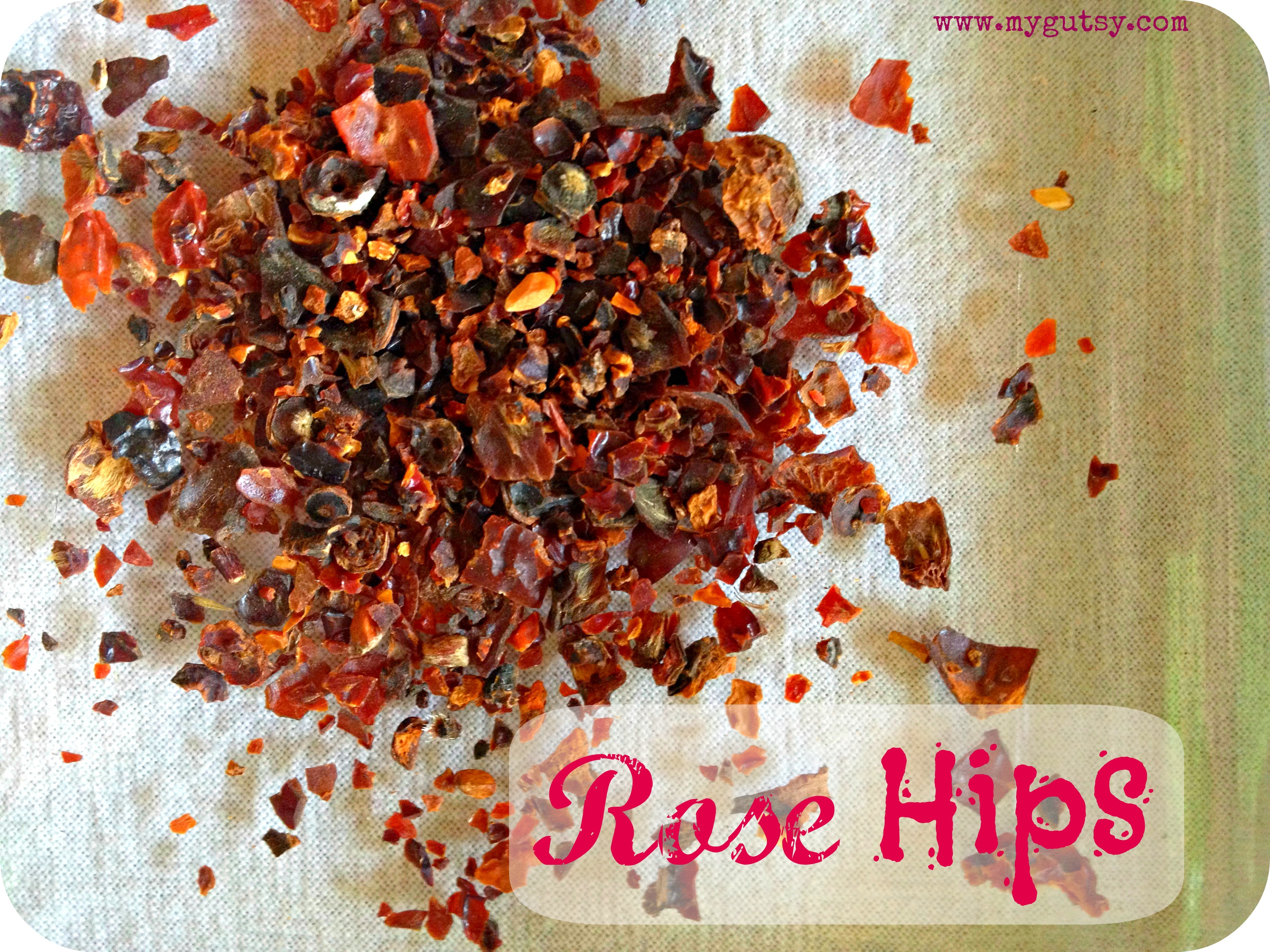
- The fruit of the rose bush
- Harvested in the late summer or fall
- The “hips” are harvested after the petals drop
- Oval or pear shaped – small
- reddish-orange in color
- Pollenates in spring and early summer
- Technically the rose hips are not the actual fruit (even though they look like it)- the seed inside the rose hip is the “fruit”.
Herb profile
- High vitamin C (1 Tbsp= 60+ mg of vitamin c)
- Provides more vitamin C then an orange (30-50x more)
- Vitamin A, B-1, B-2, B-3, D, E, K
- Calcium, Iron, Zinc, sillica
- Phosphorous, tannis, flavonoids
- citric acid & malic acid
- antioxidants
- lycopene (found in tomatoes and grapefruit)
- trace minerals
- essential fatty acids
Taste/texture
- They are tart with a hint of sweetness.
- Reminds me of a floral cranberry.
- Contain many seeds as well as the pulp -like a berry would
- I buy the dried and when they rehydrate the pulp is edible.
- Resemble a prickly cranberry (look at this picture)
Health benefits:
- Boost immune system- used to fight colds and infections
- Helps relieve kidney pain-low back pain
- Strengthens kidneys and urinary system.
- Helps regenerate and hydrate new skin cells and keeps skin elastic
- Used topically for scars, burns, and acne
- A mild diuretic and laxative
- Anti-inflammatory
- Strengthens Circulatory system- blood cleanser
- Remedy for arthritis and sore joints
- Rich in antioxidants and used to help cancer
- Helps relieve sore throat and inflammation
- Relieves stress and nerves
- Supports thymus
- Helps ease PMS and heavy periods
- Quenches thirst
- Helps treat bladder infections
- Normalizes bowels, treats constippation and stops diarrhea.
- eases headaches and dizziness
- heals scurvy (vitamin c deficiency)
- relieves itching
- prevents diabetes
- helps eradicate h. pylori
How to use?
There are many uses for rose hips (not just tea)
- Syrup- usually a simple recipe of sugar, rose hips, and water
- Jam– the hips are boiled down into a puree/jelly. I bet you could use honey instead of sugar.
- Soup– a traditional soup called “nyponsoppa” is made in Sweden (this blog I linked to has AMAZING pictures of the rose hip)
- Wine– some consider it secondary to grape wine
- Oil-used for eczema, stretch marks, brittle nails, dry hair, skin problems, bruises, burns, wrinkle. Commonly used for beauty products. Dry oil=easily soaked into the skin
- Relish– blended with cranberries…this looks so yum!
- powder: Can be spooned into smoothies, water, or put into capsule as an easy supplement
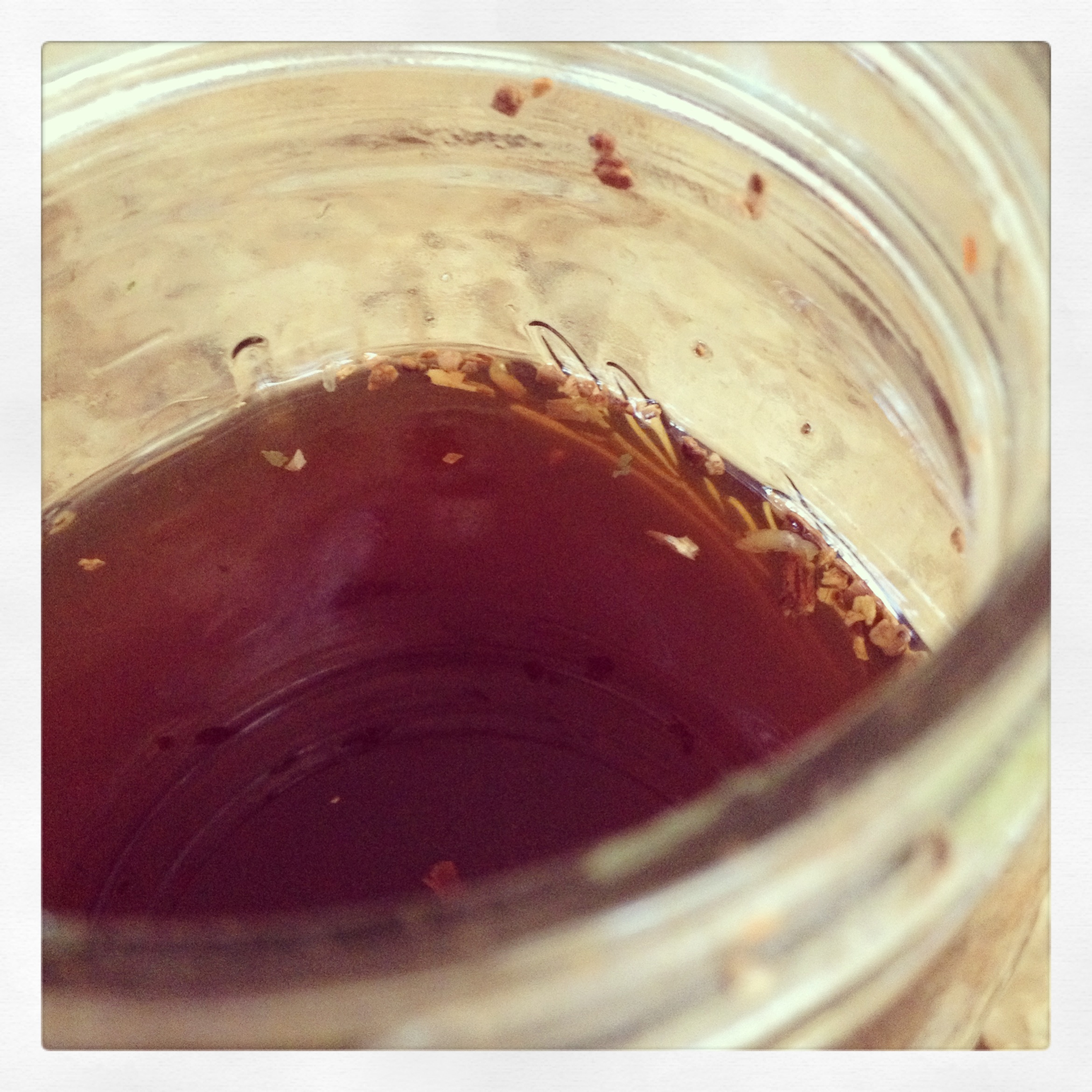
- Herbal tea– a enjoyable and medicinal tea made by steeping hot water over the dried or fresh hips.

How to make Herbal Tea?
- 1-2 Tbsp of dried rose hips (buy here)
- 1 cup of boiling water
- Scoop rose hips in a ball jar (this is whatIi use) or heat proof cup/mug
- Pour boiling water over the rose hips
- Cover (with a plate or a lid) and let steep for 15-20 minutes
- Strain out rose hip pulp and seeds (or reuses for second “steep”- still contains vitamins and minerals *this is what I do often)
- Drink and enjoy your tea!
* you can also boil the rose hips for 10-15 minutes to make a “darker-richer” brew of tea. This will reduce the vitamin C content, becasue vitamin C is sensitive and denatures with boiling.
History
The Rosary:
Long ago, people thought the rose hips to be sacred. This is corroborated from the fact that during the Middle Ages, the rosary of the Catholics was made from rose hips and hence they were called rosary. These rosaries were used to count the prayers as they were also being said. Even today, the beads of the rosary used by the Catholics resemble the rose hips and like the fruits of different species of the rose plant, these modern-day beads are also smooth and elongated in appearance.
WWII:
During WWII oranges could not be imported into Britain and Scandanavia so about 500 tons of rose hips were collected and made into “National Rose Hips Syrup” that were distributed as a nutritional aid by the Ministry of Health.
Native Americans
Native women didn’t brew a tea and throw away the cooked berries. These were used in soups and stews. The “leftovers” cooked out in a largish batch of rose-hip tea (the berries expand a lot) are a good dinner vegetable, with butter and salt. Native Americans used Rose Hips to treat muscle cramps.
Origin
Probably cultivated first in ancient Persia and carried to Greece and Rome. The botanical genus, Rosa, is derived from the Greek, roden, meaning “red” and the Latin, ruber, also meaning “ruby” or “red,” as apparently, the Roses of the ancient Mediterranean region were deep crimson, giving birth to the legend that the flowers sprang from the blood of Adonis.
Romans
The ancient Romans used Rosa canina (or Dog Rose) for the bites of rabid dogs, and in the first century A.D., the Roman, Pliny, recorded thirty-two different disorders that responded well to Rose preparations.
Chinese
An oriental species (Rosa laevigata) was mentioned in Chinese medical literature about A.D. 470, and in China, Rose Hips are still used for chronic diarrhea with stomach weakness.
Ayurvedic
In Ayurvedic medicine, Roses have long been considered “cooling” to the body and a tonic for the mind.
Great Britain
In 1652, the esteemed British herbalist, Nicholas Culpeper, prescribed them for “consumptive persons,” for “tickling rheums,” to “break the stone” (kidneys) and to help digestion. Long used for medicinal purposes in Great Britain, Rose Hips remained listed in the official British Pharmacopoeia well into the 1930s, and were considered an overall cooling tonic, an astringent, a great help for sore throats and a source of the essential vitamin C.
Medical
The American Journal of Physiology: Endocrinology and Metabolism published a medical study in January 2011 showing the positive effects that rose hips have on diabetic mice. Rose hip powder was fed to diabetic mice, along with a high fat diet. Lean mice were fed this diet for twenty weeks, while obese mice were fed this diet for ten weeks. Rose hip powder was shown to be able to not only prevent a weight increase in the mice, the obese mice lost weight. Glucose tolerance tests showed the mice on a diet which included rose hip powder tolerated glucose better than the control mice. There was a reduction in fat cells (lipids) in the liver, as well.
Where to buy?
I buy mine (here) form Mountain Rose Herbs. They are organic and already dried for you. You can buy powder form too.
Growing & foraging
Here are some links to help you start your rose hips from scratch!
Species/family:
- Rosaceae family
- Related to strawberries, blackberry, raspberry, youngberry, longanberry,boysenberry, hawthorn, apples, pears, apricots, almonds, cherries peaches.
- Cross reacts to birch pollen, other tree pollens, and fruits listed above.
My thoughts
I love Rose hips- it ranks high on my list. They make any tea blend taste good, in my opinion. I can drink it every day for many weeks without getting tired of it. I like to combine it with more untasty herbs to help hide the taste.
Many people like to combine it with mint, lemon, green tea, hibiscus (which tastes similar). I like combining it with juniper berries, oregon grape root, and dandelion root–its a strange combo but I really like it.
I dont really measure how much I use (the bottom of the jar)- but I crave it in the morning because it gives me a boost of energy and a cleanse feeling. I have also started to use some rose hip tea as the liquid in cooked cranberries.
I feel like if you want a vitamin C supplement, use herbals like rose hips, because it contains all the natural vitamins and minerals needed to help your body absorb and process the vitamin c.
I also use rose hips in combination with broccoli sprouts to help eradicate the h. pylori infection I have. One day I just REALLY needed rose hips and broccoli sprouts (even though I have never had rose hips before). I got a bad die off reaction and then found this article and chart explaining that combining the two double their effect on h. pylori eradication. woops.
Warnings:
- Generally considered a “safe” herb.
- Look at cross reactions
- Always get organic- not sprayed with pesticides
- Since it is high in vitamin C you may have loose stools if you drink too much.
- It Could interact with blood thinning or anti-inflammatory medications.
- If you are on medication, pregnant/nursing, or have an illness/disease it is always best to ask your doctor first.
Resources:
- http://www.herbwisdom.com/herb-rose-hip.html
- http://www.essortment.com/health-benefits-rose-hips-48444.html
- http://altmedicine.about.com/od/herbsupplementguide/a/Rose-Hip.htm
- http://www.drweil.com/drw/u/id/QAA326573
- http://en.wikipedia.org/wiki/Rose_hip
- http://www.webmd.com/vitamins-supplements/ingredientmono-839-ROSE%20HIP.aspx?activeIngredientId=839&activeIngredientName=ROSE%20HIP
- http://www.backwoodshome.com/articles2/butler95.html
- http://www.herbs2000.com/herbs/herbs_rose.htm
- http://wildfoodsandmedicines.com/rosehips/
- http://www.kstrom.net/isk/food/wildrose.html
- http://www.dickcontino.com/rosehips.htm
- http://www.ncbi.nlm.nih.gov/pubmed/20959531
- http://www.naturalnews.com/034794_rose_hips_vitamin_C_osteoarthritis.html
~Stay Gutsy, Caroline